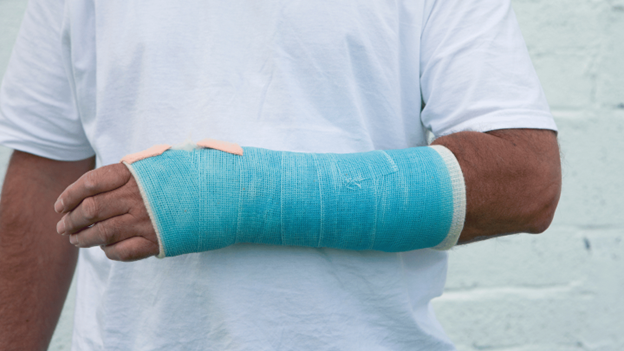
Winter wrist injuries: How to know if your wrist is broken after a fall.
You're walking across an icy parking lot when your feet slip out from under you. You throw your hands out to catch yourself and suddenly your wrist explodes with pain. Now you're sitting there wondering: Is it just a bad sprain, or did I actually break my wrist? A broken wrist is one of the most common winter injuries and knowing what to do in those first few minutes makes a real difference.
The problem is that a broken wrist and a bad sprain can feel pretty similar at first, which is why it's important to know the signs.
Understanding wrist fractures from winter falls.
A broken wrist happens when one or more of the bones in your wrist crack or break. Your wrist is made up of several small bones and the most common break is in the radius bone on the thumb side.
Breaks can range from a small crack that's barely noticeable to a serious fracture where the bone is completely shattered.
Not all wrist injuries are breaks. You could have a sprain (stretched or torn ligaments), a strain (stretched muscles), or a fracture. The only way to know for sure is to get an X-ray, but some signs point to a break rather than just a sprain.
How can you tell if your wrist is broken after a fall?
The biggest clue is severe pain that doesn't improve with rest and ice.
A sprained wrist hurts, but a broken wrist usually hurts a lot more, especially when you move it or put any weight on it.
Look for these signs of a broken wrist:
- Immediate, intense pain at the time of the fall
- Swelling that gets worse over the first few hours
- Bruising (which might show up as dark purple or blue marks)
- Not able to move your wrist or fingers normally
- Your wrist looks bent or out of shape compared to the other side
- Numbness or tingling in your hand or fingers
- A popping or cracking sound at the moment of injury
If you have even a few of these signs, it's worth getting checked out. Some broken wrists don't swell much at first, so don't assume it's fine just because it's not super puffy right away.
Types of wrist fractures and what they mean.
- Colles fracture. The most common winter wrist break is a Colles fracture, which is a break in the radius bone near your wrist. It usually happens when you fall on an outstretched hand. You might notice your wrist looks bent at an odd angle, almost like a "fork" shape.
- Scaphoid fracture. A scaphoid fracture is a break in a small bone in your wrist that's harder to see on X-rays at first. It causes pain on the thumb side and swelling in the middle of your wrist. This one needs careful attention because it can get worse if you don't treat it right.
- Other types. Other wrist breaks include breaks in the ulna bone (the pinky side), multiple breaks, or breaks with the bone sticking out through the skin (which is a medical emergency).
What to do immediately after a wrist injury.
The first thing to do is to stop using the injured wrist. Don't try to push through the pain or test it out. Wrap it gently with a towel or cloth to support it and apply ice if you have it. Keep your wrist elevated (raise it above your heart) to reduce swelling.
Don't try to straighten the wrist yourself or move it around a lot. Immobilize it as much as you can on the way to get medical care.
Treatment options for broken wrists.
Treatment for your broken wrist depends on how bad the break is.
For minor fractures, a cast or splint for 4 to 6 weeks is usually enough. You'll need to keep it immobilized so the bones can heal properly.
More serious breaks might need surgery to put the bones back in the right place. This is especially true if the break is displaced (meaning the bones are out of alignment) or if multiple bones are broken.
Physical therapy often comes after the cast comes off to help you regain strength and movement.
Recovery timeline and what to expect.
Simple breaks usually heal in 4 to 6 weeks, while more complex breaks can take 8 to 12 weeks or longer.
Even after the cast comes off, your wrist will feel weak and stiff at first. That's normal. Gentle movement and physical therapy help it get stronger.
Studies have shown that about 18% of people who've had a wrist fracture experience a recurrent fracture, meaning they break the same wrist again.
That's why taking the recovery process seriously and following your doctor's instructions really matters. It helps protect you from getting hurt again.
When to visit CityMD for wrist fracture care.
If you fell this winter and your wrist is painful, swollen, or looks bent, visit CityMD right away.
We can X-ray your wrist to see if it's broken and get you the right treatment immediately. No appointment needed, just walk in.
Visit CityMD if:
- Your wrist is severely painful after a fall
- You have significant swelling or bruising
- Your wrist looks bent or deformed
- You have numbness or tingling
- You can't move your wrist or fingers normally
- You heard a pop or crack when you fell
Go to the emergency room if:
- Your bone is sticking through the skin
- Your hand is numb and cold
- Your fingers are turning blue or white
- You have severe bleeding
A broken wrist from a winter fall is painful, but it's treatable. Get it checked out quickly so you can start healing. Your local CityMD is here to evaluate your wrist, take X-rays and get you in a cast or splint right away.

We’re ready to care for you.
Visit any CityMD urgent care location in your community today for an evaluation with one of our expert providers.