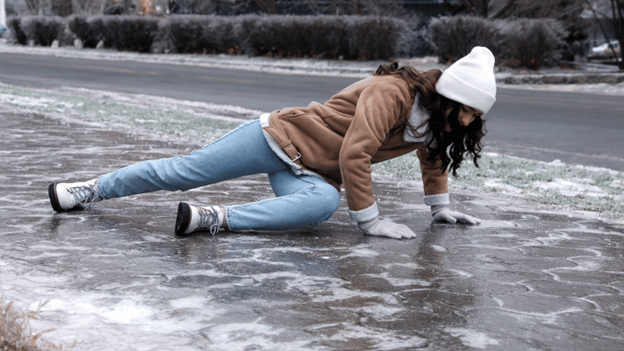
Ice falls: injuries that appear later.
You slip on ice while walking to your car, land hard and get back up. You're sore but feel okay. A few hours later, your back starts hurting. By the next morning, your neck is stiff and you have a headache. Does this sound familiar? Slip and fall injuries from ice are sneaky and many injuries don't show up right away.
Winter brings ice and ice brings falls. In fact, 97% of all weather-related injuries are slips and falls on ice and snow and more than 800,000 people end up in the hospital each year from slip-and-fall injuries.
At CityMD, we see plenty of ice-related injuries during winter. We know that some hurt right away, while others can surprise you hours or days later. Knowing what to watch for helps you make smart choices about your health.
Common ice-related slip and fall injuries.
When you fall on ice, you can hurt many parts of your body. Some injuries are obvious right away. Others hide until later.
Fractures and broken bones.
Falls on ice commonly break wrists, hips and ankles. Women over 50 are especially at risk, partly due to weaker bones after menopause.
Sprains and strains.
These soft tissue injuries happen when muscles and ligaments stretch or tear.
Your ankle twists, your shoulder gets pulled, or your knee bends the wrong way. Sprains and strains might not feel too bad at first, but they can swell and hurt more as hours pass.
Head injuries and concussions.
A hit to the head during a fall can cause a concussion, a type of brain injury. But many people don't realize they have a concussion right away.
Your brain moves inside your skull and can get bruised even without losing consciousness. Concussion symptoms often show up hours or even days after the fall.
Whiplash and neck injuries.
When you fall backward or sideways, your neck can jerk suddenly. This whiplash can strain muscles and ligaments in your neck.
Like concussions, whiplash symptoms might not appear for hours or days after the injury.
Back and spine injuries.
Falls that twist your body can hurt your back or spine. These injuries might feel minor at first, but they can cause serious problems if you don’t treat them.
Delayed symptoms after slipping on ice: what to watch for.
The tricky part about ice falls is that many injuries don't hurt right away.
Your body can feel fine right after a fall, but injuries develop as time passes. Here's what to watch for.
Concussion and head injury symptoms.
- Headaches
- Dizziness or feeling lightheaded
- Confusion or trouble thinking clearly
- Nausea or vomiting
- Sensitivity to light or noise
- Trouble concentrating or memory problems
Concussion and head injury symptoms can appear hours or even days after the fall.
Whiplash symptoms.
- Neck pain and stiffness
- Headaches
- Shoulder pain
- Pain spreading to the arms or upper back
Whiplash symptoms usually develop over the next few days as swelling builds.
Back and spine injury symptoms.
- Mild soreness that gets worse over time
- Sharp, shooting pain down your legs
- Numbness or tingling in your legs or feet
- Weakness in your legs
Sharp pain, numbness, or tingling means you should get help right away; don't wait.
Why are slip and fall injuries delayed?
When you fall, your body releases stress hormones (adrenaline and endorphins) that can temporarily mask pain. This fight or flight response helps your body push through the pain until you’re out of immediate danger.
Swelling also takes time. You might not feel the effects of swollen joints until hours later. Internal injuries like bruises take time to develop and cause discomfort.
When slip and fall on ice injuries need urgent care.
You can manage some falls at home with rest and ice. But certain signs mean you need to visit CityMD right away.
Visit CityMD urgent care immediately if you:
- Hit your head and have any concussion symptoms (confusion, headache, dizziness, nausea)
- Have neck pain with turning your head
- Have pain in your joints that doesn't improve with ice
- Can't put weight on your injured leg or arm
Seek immediate emergency care if you experience a severe headache or neck pain, confusion, vomiting, or any neurological symptoms, including weakness, numbness, tingling in the extremities, or loss of bladder or bowel control.
Home care for slips and falls is okay if you:
- Have mild soreness that's getting better
- Can move without sharp pain
- Don't have any head or neck symptoms
- Have no numbness or tingling
- Just have minor scrapes or bruises
For home care, use the RICE method: Rest, Ice (20 minutes at a time), Compression with a bandage and Elevation. Over-the-counter pain relievers like ibuprofen can help.
Want to avoid this pain altogether? Learn practical ways to stay safe in our safety guide on preventing slips, trips and falls.
Don't wait, get checked out.
If you slipped on ice and landed hard, don't assume you're fine just because you feel okay right now. Hidden injuries can develop over hours or days. Getting checked out early catches problems before they become serious.
CityMD is here to help. No appointment needed, just walk in. We can examine you, figure out what's hurt and help you heal properly. Most locations are open until 8 pm and some until 11 pm.
Visit a CityMD location near you today. Don’t take a chance on your health this winter.

We’re ready to care for you.
Visit any CityMD urgent care location in your community today for an evaluation with one of our expert providers.